
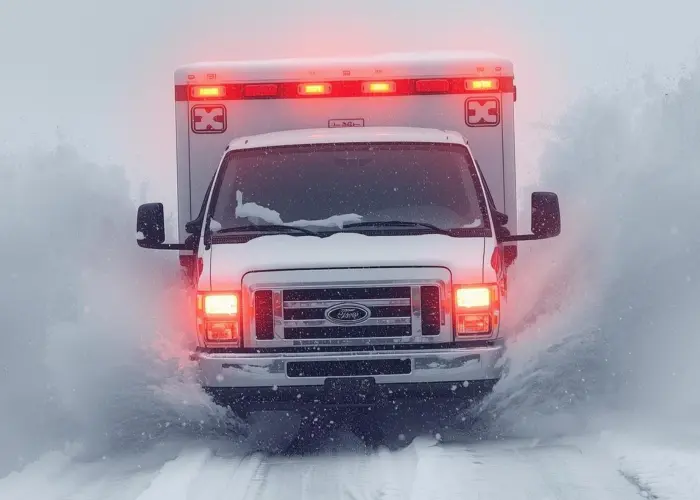
Winter has a way of revealing the truth about connectivity.
Snowstorms, ice events, and prolonged cold do not just disrupt daily life. They stress power grids, damage infrastructure, and expose fragile communication systems. For public safety agencies, these failures often occur at the exact moment demand is highest.
When roads are impassable, visibility is low, and field operations are stretched thin, connectivity becomes a lifeline.
Unfortunately, many networks are not designed with winter realities in mind.
Winter Is a Stress Test for Connectivity
Extreme winter weather introduces challenges that standard network designs often overlook, including:
- Ice and wind damaging fiber and aerial infrastructure
- Power outages taking cell sites and network equipment offline
- Battery backups draining faster in extreme cold
- Signal degradation in snow-covered or mountainous terrain
- Network congestion during regional emergencies
These failures rarely happen in isolation. A single storm can knock out power, damage physical infrastructure, and overload remaining networks at the same time.
That is when fragile designs fail.
Field Operations Cannot Wait for Restoration
During winter events, response teams are often operating in:
- Remote or rural areas
- Low-visibility conditions
- Extended shifts with limited access to facilities
- Rapidly changing operational environments
In these moments, connectivity must support:
- Real-time situational awareness
- Command and control communications
- Data access for mapping, weather, and logistics
- Reliable communications between field teams and command centers
Restoring service eventually is not enough. The mission requires connectivity that remains available.
Why Traditional Designs Struggle in Winter
Many agency networks rely on designs that assume:
- Power will be restored quickly
- Outages will be localized
- Cellular networks will remain available
- Failures will occur one at a time
Winter storms challenge all of these assumptions.
Shared dependencies such as power grids, physical routes, and regional carrier infrastructure mean that primary and backup connections often fail together. When that happens, agencies are left without options.
Designing for Winter Means Designing for Failure
Mission-ready connectivity begins with architecture, not devices.
Agencies must ask:
- What happens when commercial power is unavailable for days?
- What if cellular networks are congested or partially offline?
- What if fiber routes are damaged by ice or wind?
- How do field teams stay connected when terrestrial infrastructure is compromised?
Resilient design assumes these failures will occur and plans for continuity rather than recovery.
Multi-Path Connectivity for Extreme Conditions
True resilience requires diversity across:
- Physical paths to avoid shared infrastructure risks
- Carriers to reduce dependence on a single provider
- Technologies to ensure no single failure mode takes everything down
Winter-ready architectures integrate:
- Terrestrial broadband where available
- Multi-carrier cellular connectivity
- Satellite connectivity that operates independently of local infrastructure
These paths are active, monitored, and ready. They are not reserved for last-resort use.
Satellite as a Winter-Ready Path
In extreme weather, satellite connectivity provides:
- Independence from damaged ground infrastructure
- Predictable performance during widespread outages
- Coverage in remote or hard-to-reach areas
- A critical layer of resilience for field operations
When integrated properly, satellite complements cellular and terrestrial networks and helps maintain continuity when winter conditions disrupt everything else.
From Seasonal Planning to Year-Round Readiness
Winter weather is predictable, but its impact does not have to be disruptive.
Agencies that remain mission-ready during extreme conditions are those that design connectivity to withstand stress rather than avoid it. They plan for power loss, infrastructure damage, and congestion before the first storm arrives.
At PEAKE, we help public safety agencies design resilient, winter-ready connectivity architectures. By integrating multiple paths, multiple carriers, and satellite solutions, we help ensure communications remain available when winter puts networks to the test.
Because when conditions are at their worst, connectivity matters most.